Meet the workforce
behind the numbers
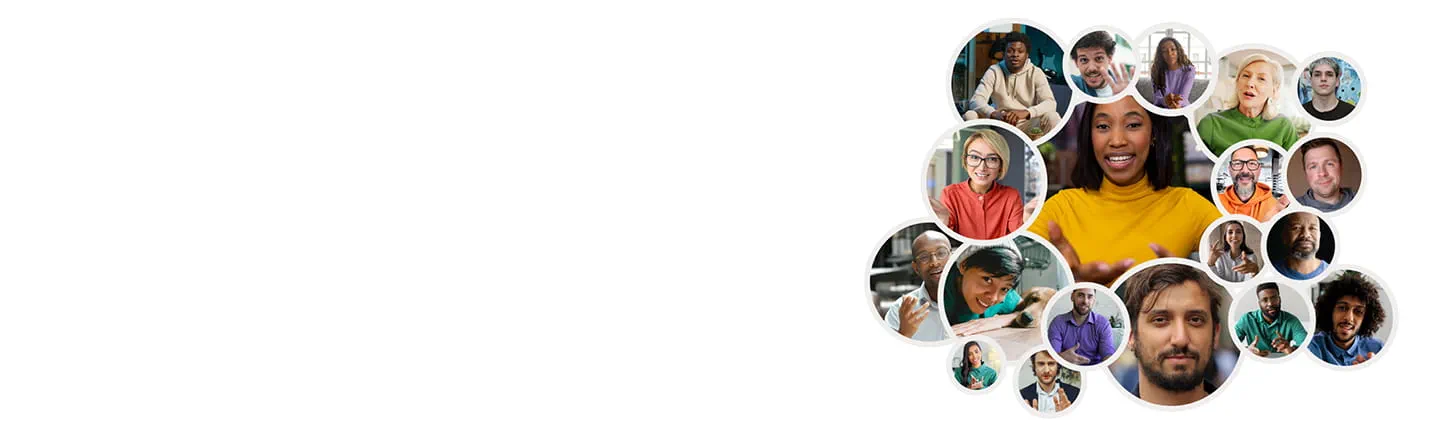
We often talk about “the workforce” as though everyone experiences change in the same way. They don’t.
People come to work with different ambitions, pressures and expectations. Some are excited by new technology and the opportunities it creates. Others are looking for more support, clearer prospects or simply a stronger reason to stay.
Last year, the Adecco Group’s Global Workforce of the Future 2025 showed how important purpose, value and trust are to people’s experience of work.
Our upcoming Global Workforce of the Future 2026 research looks more closely at those differences. We’ve drawn on some of its themes to create four characters: the thriver, the builder, the seeker and the drifter.
They are not defined by age, job title or industry. Instead, they represent different relationships with work – from how supported and confident people feel, to how they approach technology, development and change.
The thriver: confident, supported and finding purpose
The thriver feels good about their work and where it is taking them. They find meaning in what they do, feel supported and understand how their contribution connects to the organization around them.
In 2025, 99% of workers who felt a strong sense of purpose every day planned to stay with their employer for the next 12 months. Among those who never felt that sense of purpose, the figure was 53%.
Workers told us that understanding company strategy, knowing how AI will affect their role and having better opportunities to grow could all strengthen that sense of purpose.
For the thriver, feeling positive about work is not just about enjoying the job. It is also about knowing where you fit and where you can go next.
The builder: making technology work for them
The builder likes to try things. They are curious about new technology and interested in what it could allow them to do differently or better.
There were already signs of this in 2025. 77% of workers said AI enabled them to perform tasks they couldn’t do before, while nearly three-quarters said it had already changed, or was expected to change, their activities and skills.
Workers using AI estimated that it saved them two hours a day on average, up from one hour in 2024. But those time savings did not always show up as measurable business impact.
For the builder, using the technology is only part of the story. What matters is what they can do with it.
The seeker: ready to grow, but waiting for the chance
The seeker wants to progress. They are willing to learn and develop, but may not see enough opportunities to do so where they are.
In 2025, workers ranked better upskilling and learning opportunities among the measures most likely to help them become more adaptable and resilient.
Career progression was becoming more important too. The proportion of workers saying they would stay with their employer on the condition of career progression rose from 22% in 2024 to 33% in 2025.
The appetite is there; the question for employers is whether the opportunities can keep up with it.
The drifter: less connected to change
The drifter feels further removed from some of the changes happening at work. They have less exposure to new technology and may be less involved in conversations about where their work is heading.
Our 2025 findings suggest that involvement makes a difference. Among future-ready workers, 41% said their employer involved them in designing work being reshaped by AI, compared with 24% of mainstream workers. Trust in employers’ use of AI was also higher, at 6.6 out of 10 compared with 3.3.
As organizations introduce new technology and new ways of working, the drifter is a reminder that not everyone starts from the same place.
Four different experiences of work
The thriver. The builder. The seeker. The drifter.
None is a job title or demographic group. They are different ways of looking at the conditions that impact how people experience work – whether they feel positive about it, see room to develop, trust their employer and feel equipped for what comes next.
Our 2025 research showed that technology is only one part of that picture. Purpose, development, involvement and trust all play a role.
This year, we’ll look more closely at what separates different experiences of work – and what employers can learn from them.
Which one sounds most like you? Take our test
The Adecco Group’s Global Workforce of the Future 2026 is coming soon – sign up to to be the first to receive the report.
Related News and Research