/top-story-banner-(1)/top-story-banner-(2)/microsoftteams-image-(9)/trends-banner-top/trends-banner-(1).png?mw=3840 "Trends Banner (1)")
#1. Growing number of companies around the world join the four-day work week revolution.
Top trends from the World of Work
Top 5 trends from the world of work
The concept of a four-day work week started out a few years ago as a social experiment. The concept – giving employees an extra day off each week for the same pay – sounded implausible and unrealistic.
But this month, two big tech companies are joining the movement and offering their employees a four-day work week. Plus, a new four-day work week trial begins in the UK for the first time with dozens of companies on board.
“I couldn’t imagine running a company any other way,” one CEO said. In our 2021 Resetting Normal research, there was overwhelming support for a more flexible working schedule in the future. Has the four-day work week finally become mainstream?
But this month, two big tech companies are joining the movement and offering their employees a four-day work week. Plus, a new four-day work week trial begins in the UK for the first time with dozens of companies on board.
“I couldn’t imagine running a company any other way,” one CEO said. In our 2021 Resetting Normal research, there was overwhelming support for a more flexible working schedule in the future. Has the four-day work week finally become mainstream?
Here are the latest 5 trends from the world of work
/pexels-fauxels-3182808/top-5-photo-1.png?h=683&iar=0&w=1024&hash=FC2A84FA046CD58F0D531344BA8000AA "Top 5 Photo 1")

#2. Can remote workers keep Venice afloat? One pilot program hopes so.
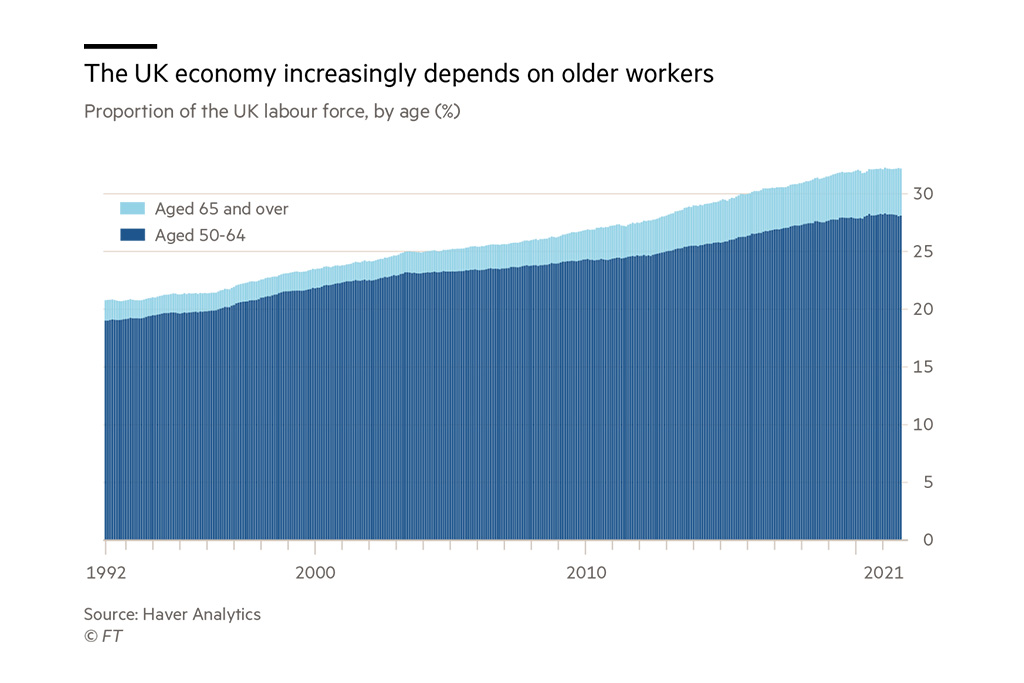
#3. Why is it considered okay to be ageist at work?
“The four-day week challenges the current model of work and helps companies move away from simply measuring how long people are “at work”, to a sharper focus on the output being produced. 2022 will be the year that heralds in this bold new future of work,” Joe O’Connor the pilot programme manager for 4 Day Week Global, told Metro. The UK trial will run alongside similar trials in the US, Ireland, Canada, Australia, and New Zealand. Spanish and Scottish governments have already launched four-day work week trials.
Earlier in the month, Japanese company Panasonic announced an optional four-day work week for their employees. The move will allow workers to spend less time working – and more time volunteering, spending time with family, furthering their studies, or even picking up a side job, according to Panasonic CEO Kusumi Yuki. Read more at Mashable.
The move comes after tech start-up Bolt announced their move to a four-day work week last week. The company said they first piloted the program last fall, and found the results were overwhelmingly positive. “I couldn’t imagine running a company any other way,” CEO Ryan Breslow told CNBC. The company found some overwhelming benefits to the extended weekend, including streamlined work processes, happier employees, and greater productivity. Internal data found that 94% of workers and 91% of managers wanted to program to continue following the trail, and nearly 90% of both workers and managers reported greater productivity as a result. Read more at CNBC.
The historical city is facing a key problem: it’s historic center isn’t very populated anymore. But the new Venice-based project Venywhere is hoping to change that by attracting young, skilled and nomadic workers to their city.
Italian officials are looking to bring in young workers who want to live in Venice, not just visit. The move comes after similar program have cropped up in Italy and around the world. These cities, which have long relied on tourism to drive revenue, want to diversify their economies and help repopulate the historic centers.
The Venice project has been designed with freelancers and remote workers in mind, but they are also hoping to entice companies to send their teams to live in Venice for months-long stints.
“The pandemic has created a large population of highly skilled people who want to move,” says Venywhere founder Massimo Warglien, a professor of management at the Università Ca’ Foscari. “It’s a way of repopulating Venice.”
Unlike other programs, though, Venice will ask workers to pay a one-time fee to ease them into life in the city. That fee covers apartment viewing assistance from afar, help with the healthcare system, and more. Read more at Bloomberg.
In that meeting, his HR manager bluntly asked him when he intended to retire. Tapping, in his early 60s, quit his job and sued the company for age discrimination.
Last month, he won the case when a judge ruled that it is illegal to ask someone about their retirement plans unless they have brought it up themselves.
But survey after survey establishes the same thing: people over 50 find it much more difficult to get job interviews, and they are more likely to be eased out of existing jobs.
Although ageism is everywhere in the world of work, few victims take their case to court like Tapping.
“It’s still under the radar,” Lyndsey Simpson, founder of the employment website 55/Redefined, told the Financial Times, “because people don’t want to go on the record. They think they’ll be attacked and they think it will be career-limiting. I’ve lost count of the number of men who are turned down for jobs and are told: you are overqualified, or you don’t meet our diversity requirements.”
Read more at the Financial Times.
Most adults are likely to make friends at work over any other place, according to Gallup research.
But with so many workplaces moving to the virtual space, one Boston Magazine piece argues that it may become even more difficult to make new friends. With remote work, gone are the days of water cooler chats or lunchtime gossip.
"Work gives us social connections, professional friends, personal friends,” says Tsedal Neeley, a professor at the Harvard Business School. She sums it up in one word: nourishment.
Read the full piece at Boston Magazine.
As workers start their journeys to return to the office, there’s talk of burnout amid inevitable resistance. Why?
“We’re not re-emerging refreshed and ready to go, it’s actually quite the opposite,” says Mary Spillane, a clinical psychologist and the Australian mental health expert for the Headspace app.
How can we battle burnout on the return to the office heading into the new year? Dr Mark Deady, a workplace mental health specialist at Black Dog Institute, suggests trying these tips:
- Don’t compare yourself to others
- Bounce forward and take steps to live the kind of life you want
- Use healthy coping strategies to tackle problems
- Take steps to craft your job, or balance demands of the job with resources, abilities, and needs
- Reach out if you need help
Read more at the Sydney Morning Herald.
What else made headlines this month?
Studies show that half of today’s 5-year-olds will live to 100. Here’s what that means for the world of work – and the pace of work as we know it.
Microsoft is betting big on the metaverse: they’ve purchased gaming company Activision Blizzard, positioning them as a major rival to Facebook.
In the U.S., workers quit their jobs at record levels in November.
Last year was Earth’s fifth hottest on record, European scientists announced.
Ikea is cutting sick pay for unvaccinated staff forced to self-isolate because of COVID exposure.
Microsoft is betting big on the metaverse: they’ve purchased gaming company Activision Blizzard, positioning them as a major rival to Facebook.
In the U.S., workers quit their jobs at record levels in November.
Last year was Earth’s fifth hottest on record, European scientists announced.
Ikea is cutting sick pay for unvaccinated staff forced to self-isolate because of COVID exposure.